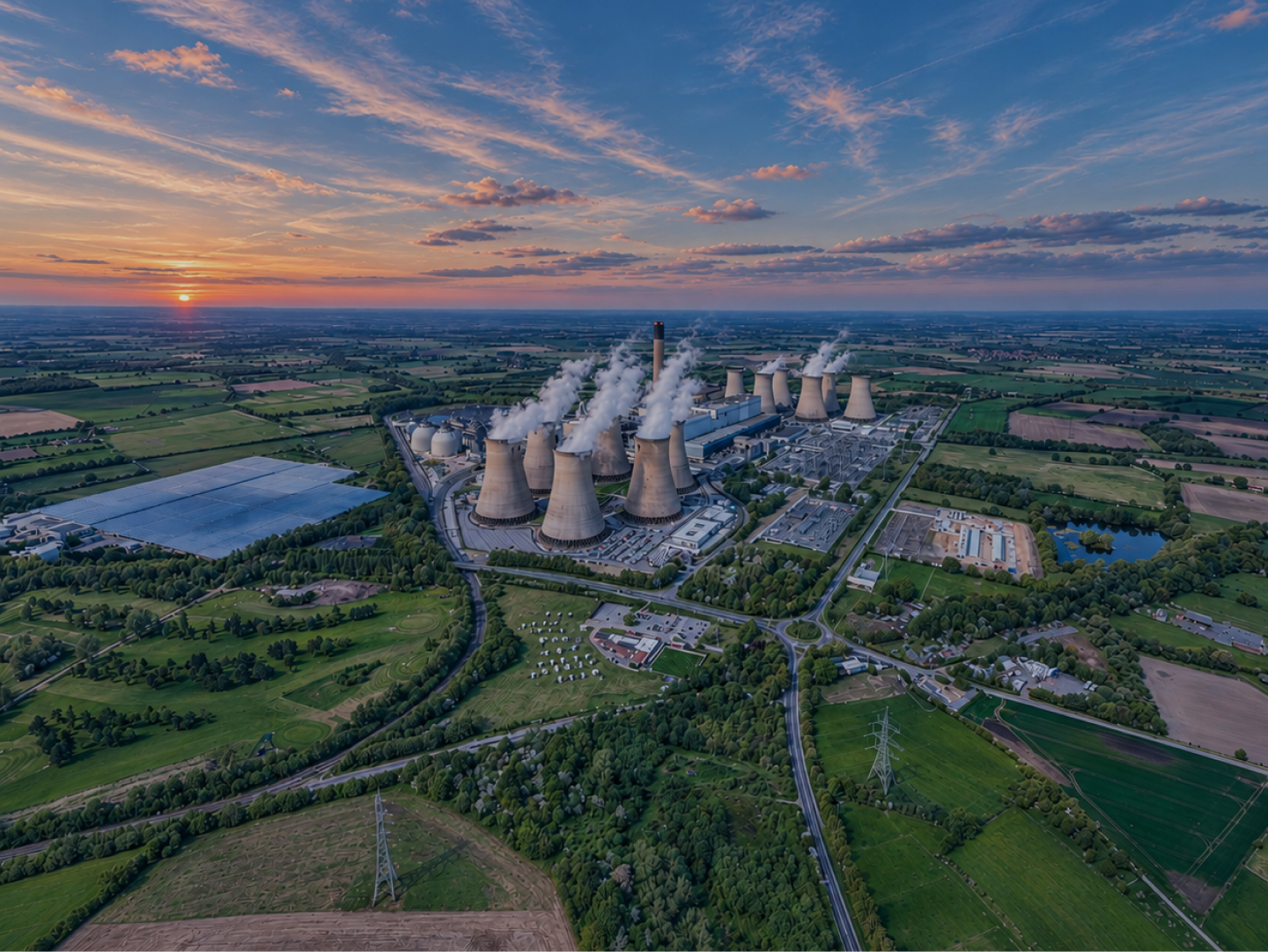

Earlier this morning, we announced an ambitious new partnership with Drax to develop an AI factory alongside their flagship power station near Selby, North Yorkshire. I will let the reader glean the core details from the RNS release but wanted to emphasize a few points that are not covered there while putting the announcement in the context of the current market volatility.
This transaction is the definition of how long-duration capital operates. First principles drive decision making, not the current state of the equity or bond markets. In infrastructure, those first principles are fairly simple: will demand last as long as the asset, can it be delivered at a cost its cash flows can repay and is the capital committed for the duration of the repayment period?
Radiant’s project at Drax passes all three tests. Demand: the government says the UK needs at least 6GW of AI-capable capacity by 2030. Delivery: the site brings up to 1GW generation, and Radiant delivers capital, compute and software as one product, which is where the gains in cost and build time come from. Capital: Brookfield and Qai, whose horizons are measured in decades.
This investment commitment comes at a time when the markets are expressing considerable doubt about the viability of many nascent neoclouds. The evidence has been hard to miss over the past few weeks, as rising borrowing costs and widening credit spreads push the market towards players that can fund their growth and have the operational track record to deliver consistently and at scale. Missing either one carries a steep penalty; missing both makes debt-funded expansion nearly impossible in the current rate environment.
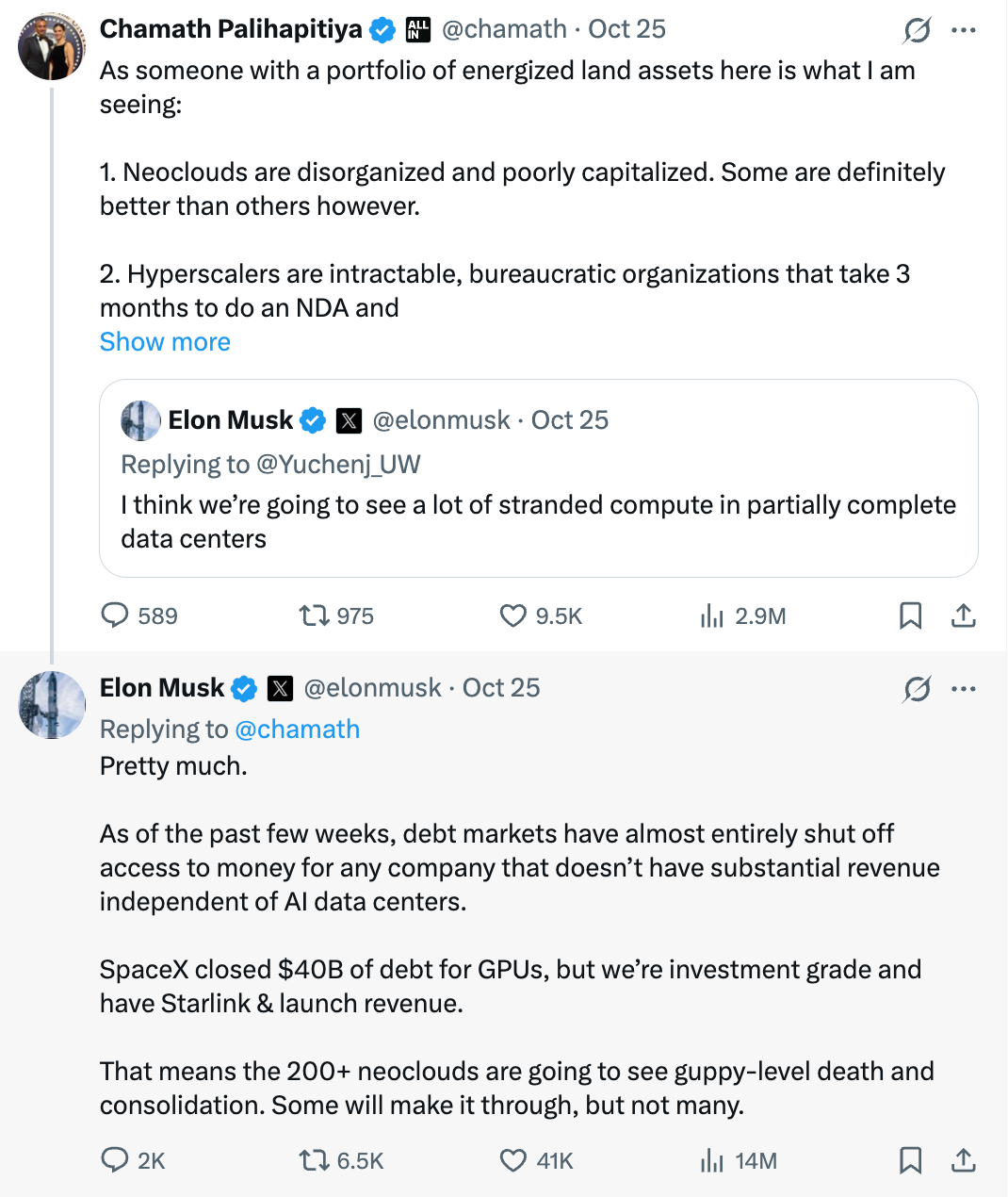
The underlying issue is that the revenue generation period for these projects lags the capital expenditure period by 9-18 months. There is significant variability in those dates because there is significant variability in the expertise embedded in the builders. JLL puts the average global build time for a 50MW data center at 18 months and reports that 57% of projects experienced construction delays of at least three months in 2025. The best builders land at the short end of that range and the rest at the long end. The market is pricing that difference, and it wants balance sheets that can absorb a delay.
Compounding the risks is the sheer scale of what is required to pull a major project out of the ground. The Information reports that a new Vera Rubin 72-GPU rack will run around $8M. That does not include networking, power distribution, cooling, buildings and skilled labor. Add those and a GW-scale program like Drax runs to more than £20bn. The Vera Rubin systems are state of the art and are orders of magnitude more efficient at token production - but the upfront cost is the upfront cost.
The result is that we have entered a new chapter in the AI buildout. Despite incredible demand (as evidenced by the scarcity of everything in the supply chain), the market and the supply chain that delivers the infrastructure are increasingly demanding counterparties with fortress balance sheets and, simultaneously, a track record of spotless delivery (which ensures uninterrupted availability). Very few players will clear that bar, and fewer still will do so successfully. It is, in essence, a flight to quality, and this phase is likely to last longer than many in the market appreciate.
The routes forward for operators without the requisite financial strength (prepayment, backstops, bankable contracts and joint ventures) are harder to come by. While the core players are doing everything they can to fund and protect the buildout, there are simply limits to what they are able to do. Backstops work best behind builders who can stand on their own.
When 87% of your fee-bearing capital is long-dated or perpetual, as Brookfield’s is, volatility can present opportunity, particularly when short-duration capital pulls back or asks for more return, and patient capital keeps building into a market that is still short of capacity. That is the cycle we are in now and that is why this announcement is such a strong endorsement of our thesis.
Radiant is built on the concept that capital, powered land, compute and software must work as a single, integrated product. When they do, there are significant gains in capital efficiency, build time, operational efficiency and risk mitigation. The Drax project is the poster child for that thesis and the long-duration investing approach of Brookfield and its partner Qai. The program scales in phases, reaching a full GW by Phase 3, and will cost tens of billions of dollars to deliver.
For the UK, where Radiant is headquartered, the Drax project matters on two fronts. The first is capacity. With more than 50GW of data centers waiting in the transmission queue, Drax is one of the few sites in the country that can supply power at this scale. The second is sovereignty: sovereign power, sovereign compute, data residency and a UK-based partner in Radiant give the UK a foundation it can build on for years to come. Capacity a country depends on also needs owners who will fund it through every cycle, which is what long-duration capital is for.
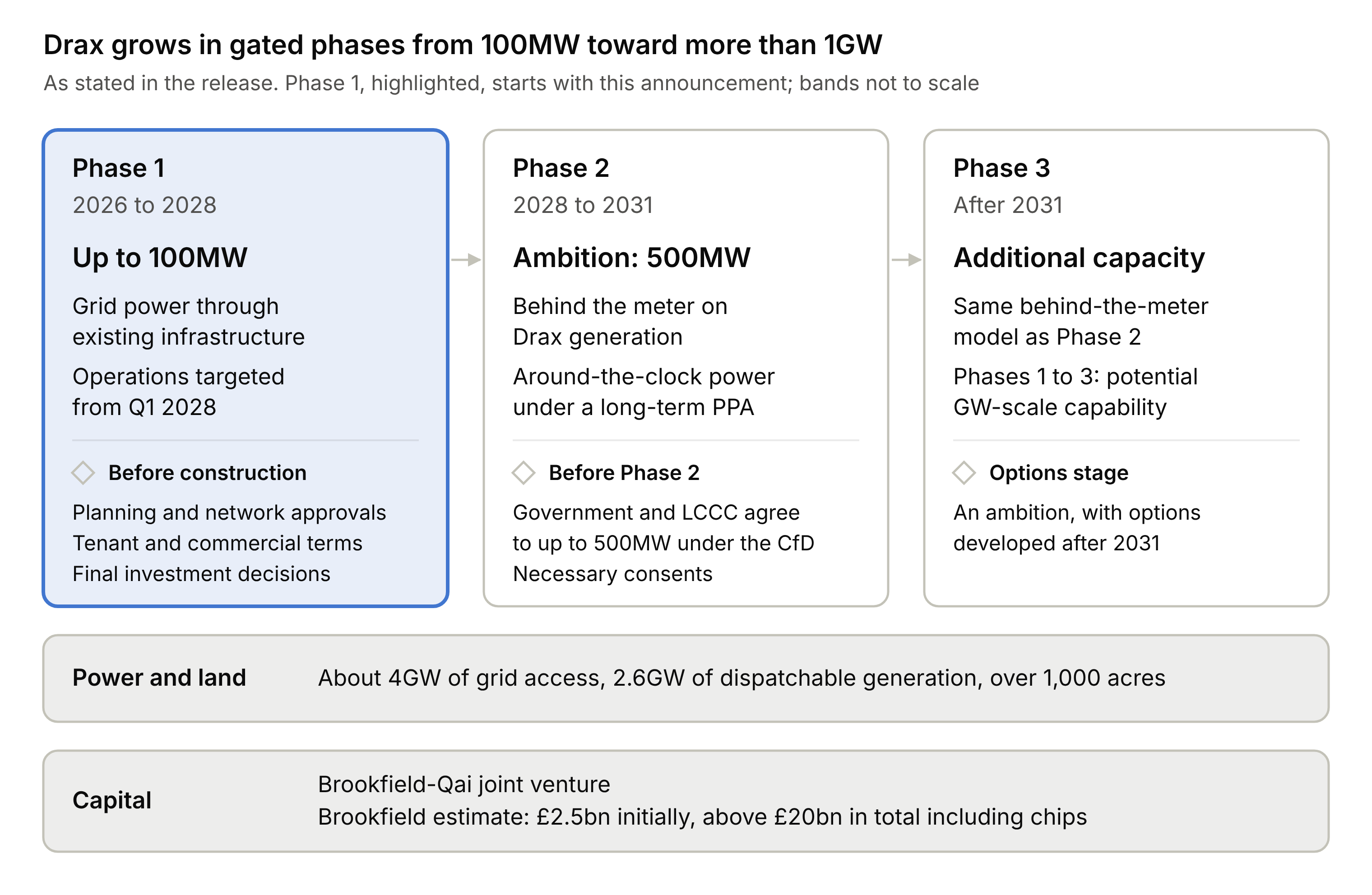
Markets will keep repricing AI infrastructure, up and down. Some of the companies building it will not come through this cycle. Demand, however, remains very strong and will outlast the current volatility. The UK’s need for compute, power and sovereign capacity runs for decades. That conviction is exactly why we are able to commit to Drax. Phase 1 targets operations in early 2028, and public consultation starts this month.