9-12 Months for Operational AI Infrastructure
Radiant creates scalable AI factories as single-tenant campuses under long-term agreements. Capacity is ready in 6 months on powered sites and 9-12 months on greenfield sites.

We develop capacity continuously
Hyperscale capacity cannot be created on demand. Radiant continuously procures a portfolio of sites and runs a predevelopment process, advancing power, permitting, design, and supply chain work before any customer deployment is finalized.
Site selection criteria is matched directly against established industry best practice variables:

Market
Geography, latency requirements, data residency and connectivity.

Critical IT load
Initial deployment size, expansion requirements and ultimate campus scale.

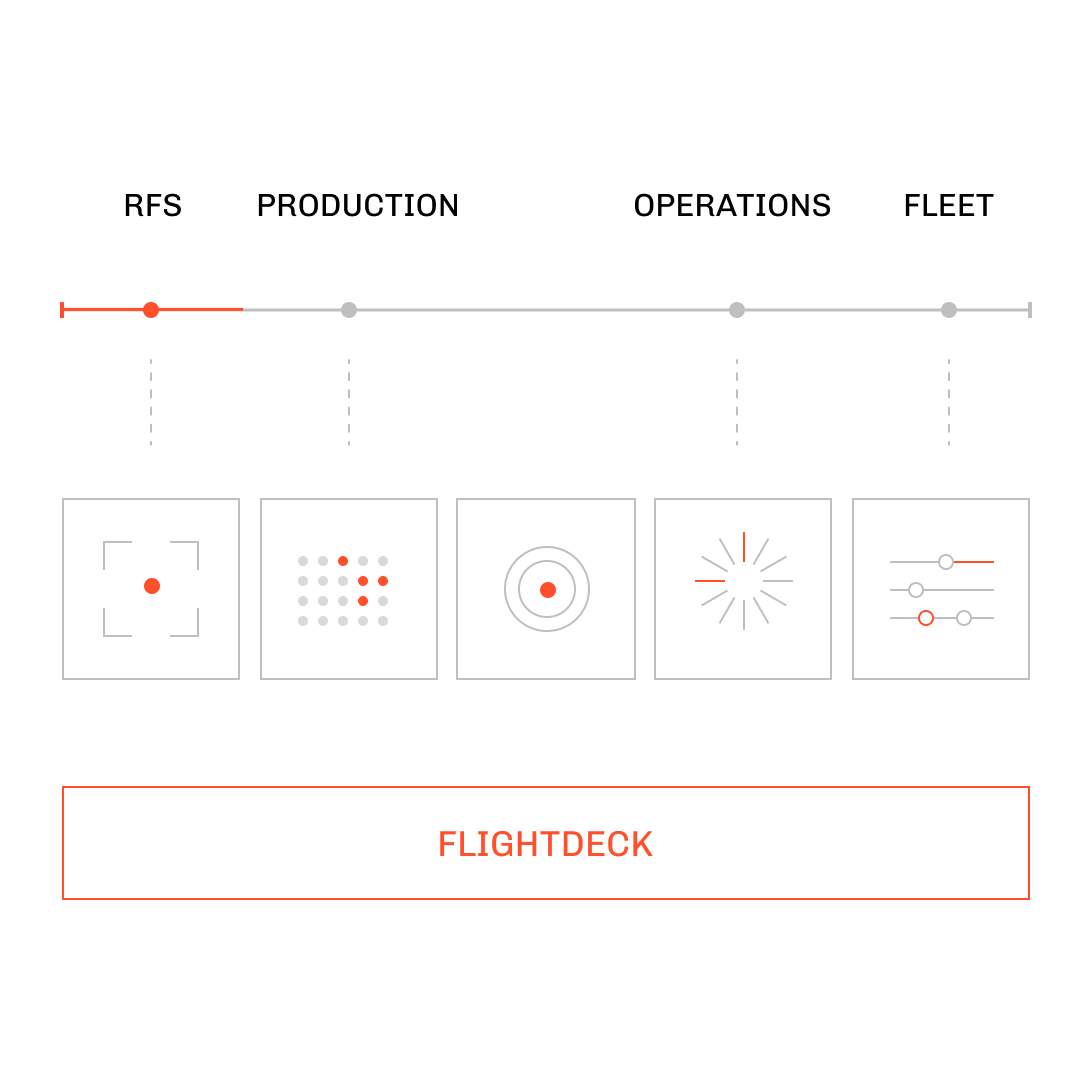
RFS
The point in the development program at which the required capacity can enter production.

Architecture
Target compute platform, rack density, network, storage and operating model.

Availability is matched to your requirement, not published as a static list. Send us your market, load and RFS, and we will share the capacity that fits and its stage of readiness.
The development program is part of the infrastructure.
Radiant deployments can start from existing infrastructure, campus expansion or a greenfield site. Whatever the starting point, delivery, permitting and execution remain consistent.

Site and facility
We evaluate the physical environment against the deployment: power, rack density, cooling, fiber, expansion, security and operational constraints. Where capacity exists, we adapt it to the target architecture; where it doesn't, we manage development, permitting and construction.

Power development
Power architecture is matched to the deployment and site, using existing utility capacity, expanding an operating campus, adding distribution infrastructure, or developing new generation and behind-the-meter power. Design is sized against critical IT load, redundancy and expansion needs.

Supply chain
Long-lead electrical, mechanical and compute procurement is planned against the RFS schedule. Our modular strategy (mechanical, electrical, whitespace skids, BTM fuel cells) lets larger campuses draw from a shop-list of standardized parts, with strategic procurement enabling parallel work.
Construction
Radiant uses repeatable, pre-engineered infrastructure blocks across new construction and existing facilities.
Prefabricated systems
Power distribution, cooling, containment and other major systems can be assembled and tested before arriving on site.
Parallel execution
Construction, facility fit-out, infrastructure deployment and compute installation can move concurrently.
Repeatable building blocks
Standardized components reduce design and field-integration work across deployments.

High-Density Power
High-Density Power
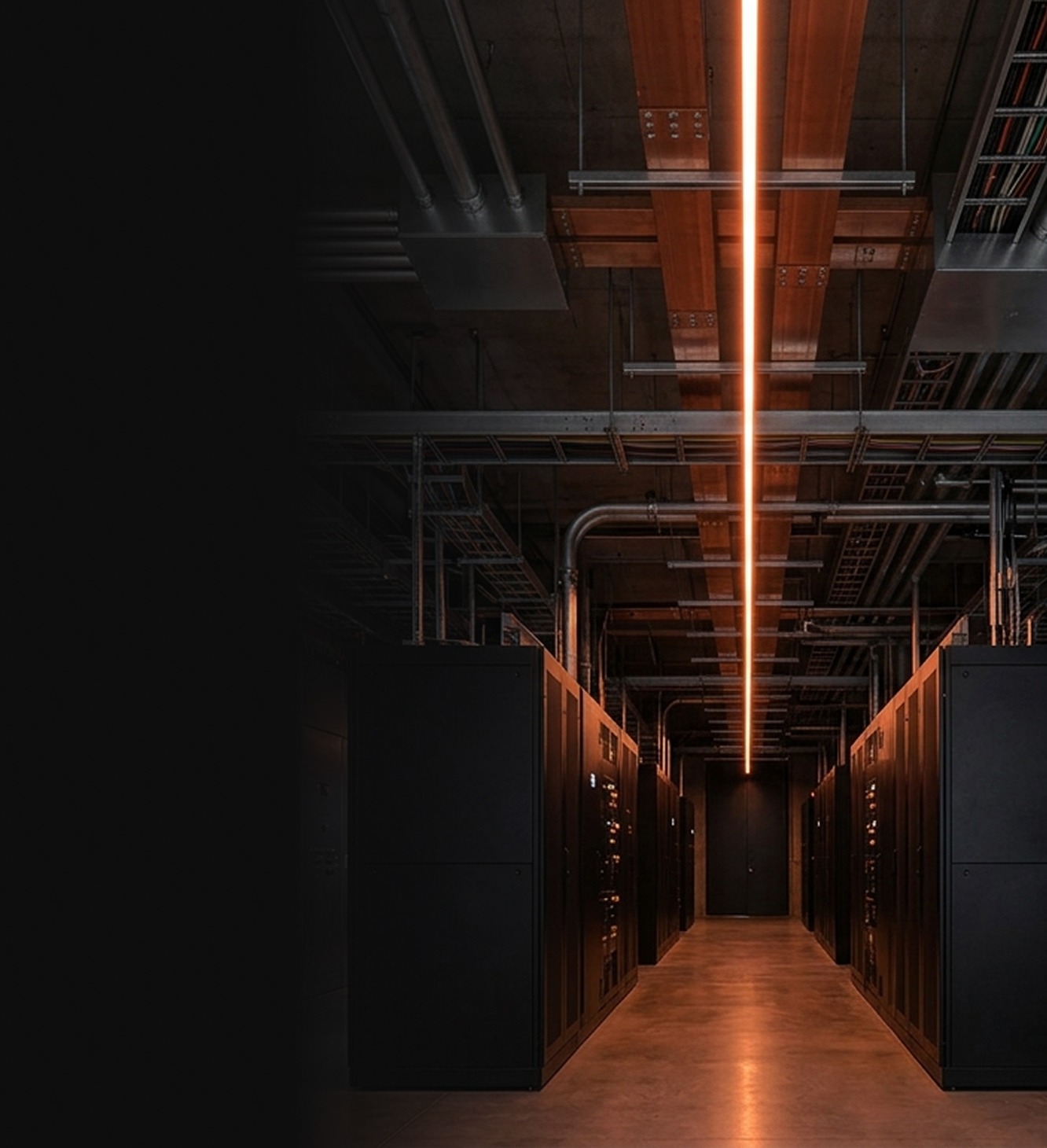
Radiant engineers the electrical system from utility interconnection through rack distribution around the sustained load profile of accelerated computing.
High-Density Distribution
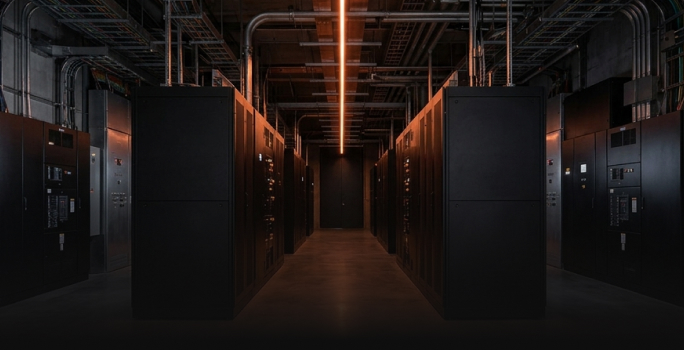
Rack power is engineered for 155 kW GB, 227 kW VR or ~1 MW for RF.
Redundancy and Maintainability
Electrical infrastructure maintains availability through planned maintenance and component replacement.
Expansion
Standardized electrical blocks allow additional capacity to be deployed as the campus or site expands.
Compute-Aligned Design
Distribution, rack power and redundancy are designed to IT load.
Liquid Cooling
Liquid Cooling
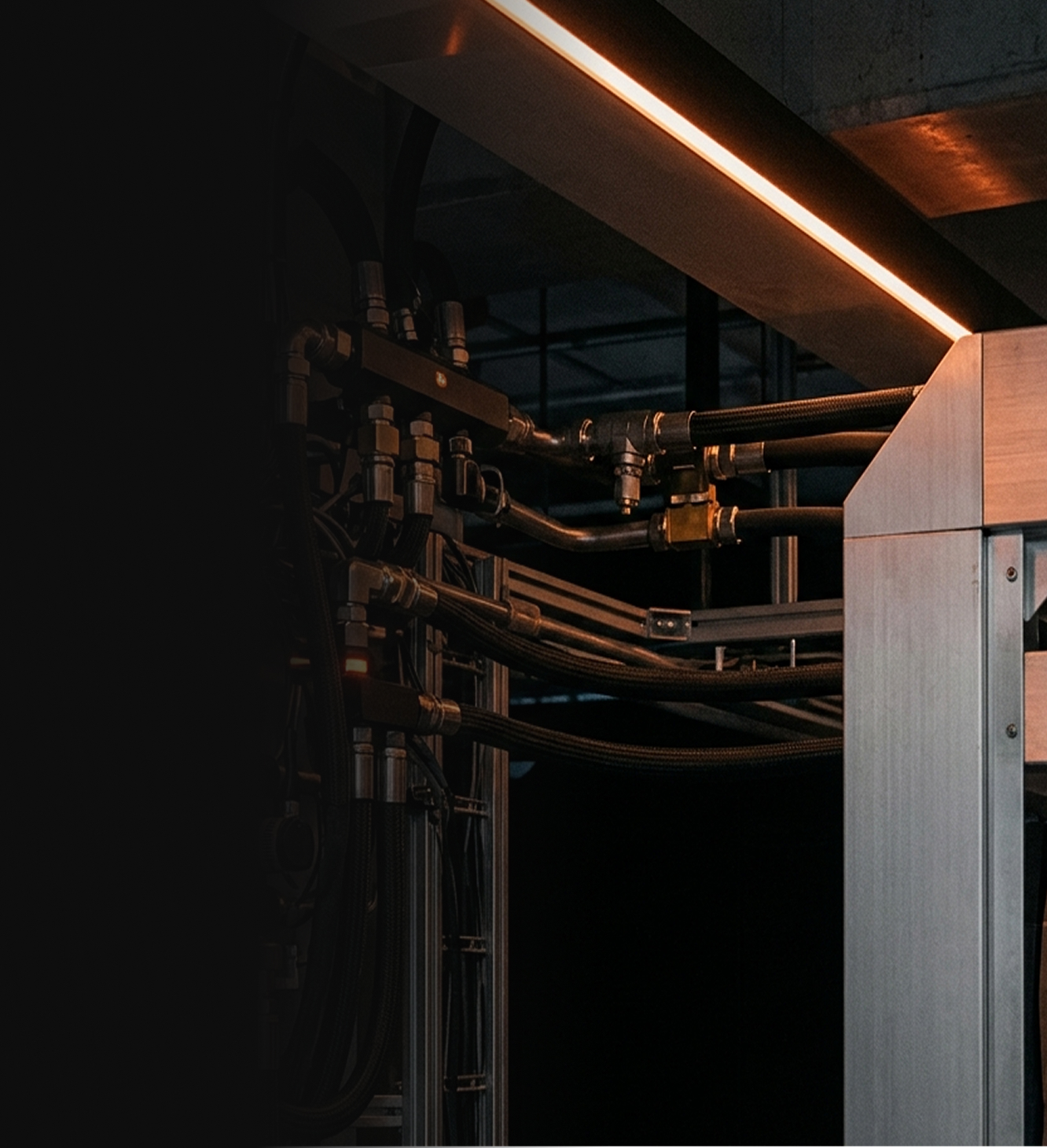
Cooling is co-engineered around the computational architecture at inception.
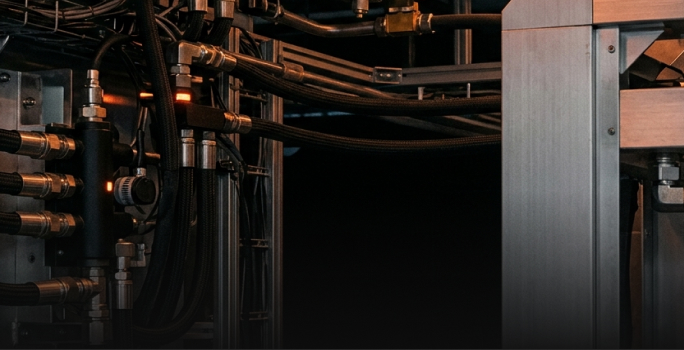
Direct-to-chip liquid cooling
Radiant supports rack-scale accelerated systems using CDUs and direct liquid cooling.
High-Density Distribution
Facility water, heat rejection, CDUs, manifolds and rack connections form one CFD-validated system.
Cooling Capacity
Cooling infrastructure deploys in repeatable blocks alongside additional compute capacity.
Density-Specific Engineering
Flow, temperature and heat-rejection requirements match rack architecture and hardware.
Expansion Planning
Mechanical infrastructure is designed for deployment and expansion, reducing rework.
Hardware Evolution
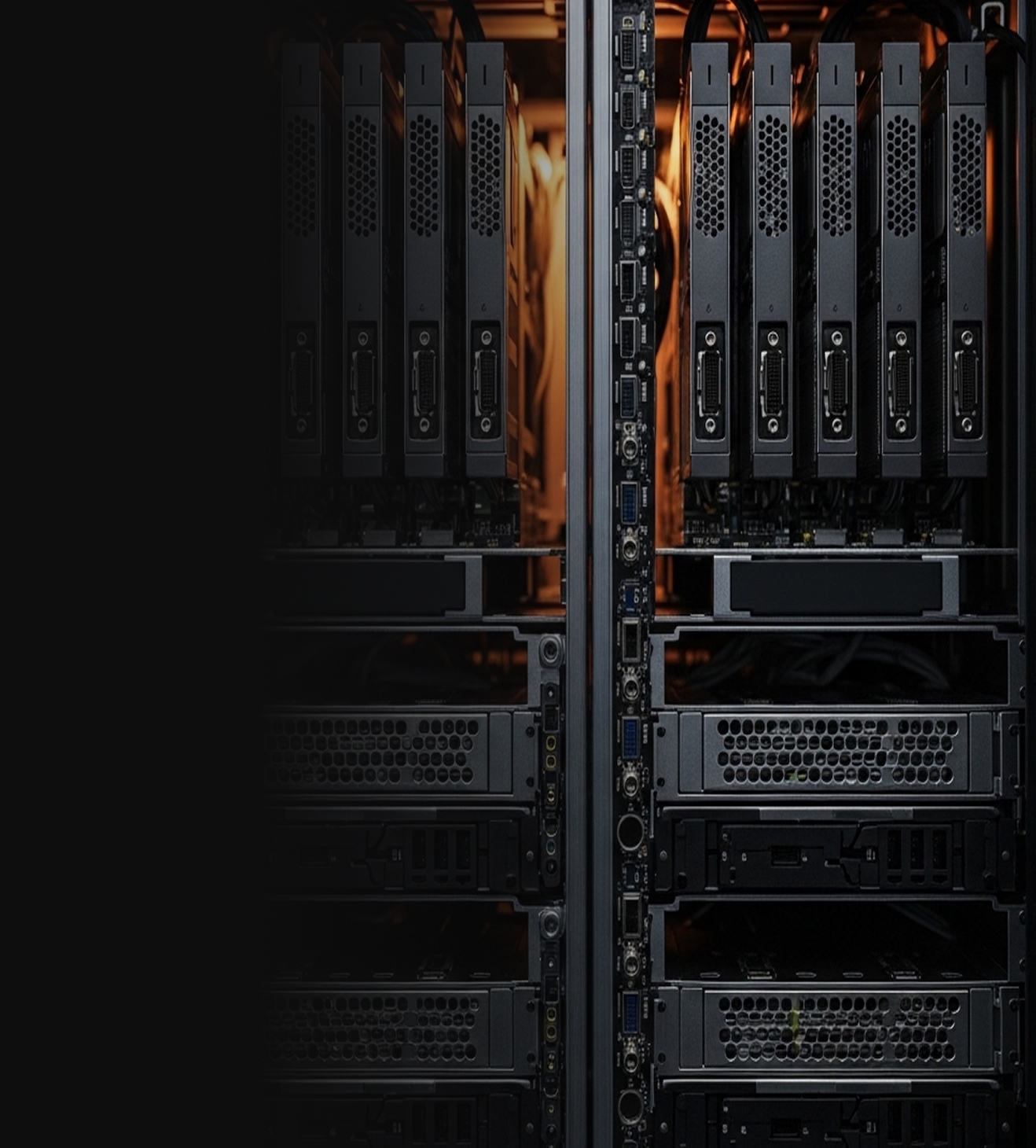
Hardware Evolution
Radiant designs each facility for successive hardware generations, with power, cooling, pathways and structure provisioned for denser racks and phased expansion.
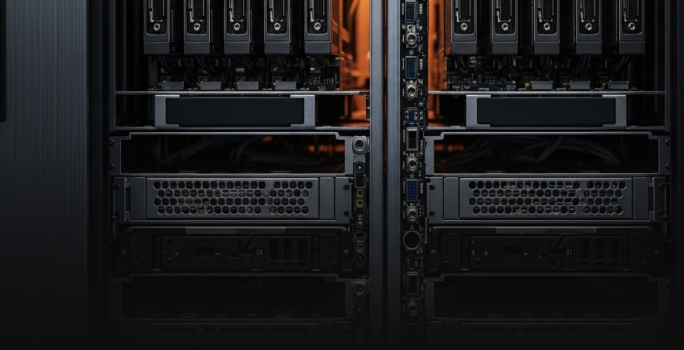
Higher Power Capacity
Provision for increased power and heat rejection where the facility supports it.
Adaptable Cooling
Cooling and electrical distribution sized to accommodate new hardware requirements.
Flexible Layouts
Physical pathways planned for changes in rack layouts and network configurations.
Phased Expansion
Capacity added in stages to minimize disruption to operating infrastructure.
Larger Rack Support
Facility layouts and structural capacity designed for denser rack-scale systems.
Accelerated Compute
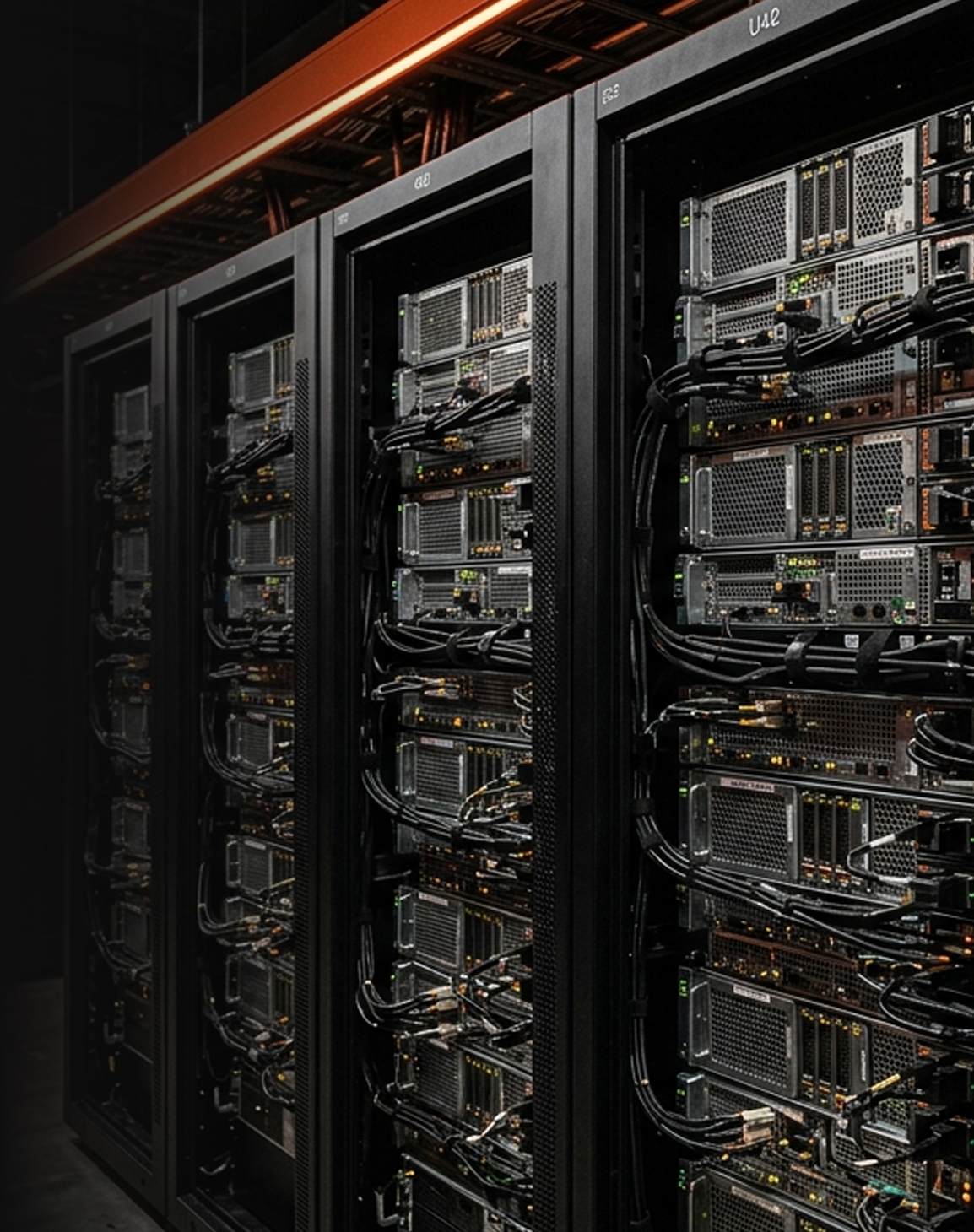
Accelerated Compute
Infrastructure is designed around NVIDIA accelerated computing platforms, including Blackwell-generation systems, the Vera Rubin platform and Rosa Feynman roadmap.
Facility and cluster architecture are developed together so that rack layout, power distribution, cooling and fabric design reflect the actual system being deployed.

Network infrastructure starts with the site.
Radiant sites are chosen to assure that adequate bandwidth and route redundancy are available for all workloads that the facility will need to support. From there, a specific network architecture and interconnect speed for the GPU network, data network and management network are designed and chosen to include potential expansion.

Diversity
Diverse fiber routes and facility entrances

Connectivity
Campus and inter-building connectivity optimised for shortest but balanced cable lengths (improve GPU latency)

Infrastructure
Data hall pathways and cabling sized for NVIDIA Quantum-X InfiniBand and Spectrum-X Ethernet fabrics

Topology
Physical layout built to the target rail-optimized and multi-plane topology
Commissioned as an AI factory.
Radiant commissions the facility and cluster as one system. That process starts before the physical infrastructure is installed.
Digital twins provide a common model across the facility and computational design allowing physical configuration, power and thermal behavior to be evaluated before deployment.
Power systems, cooling performance, redundancy and failure domains tested under operating conditions and peak load.
Compute, firmware and rack-level systems validated before production.
Network, storage and infrastructure behavior tested across the production architecture.
Telemetry, access controls, escalation paths and operating procedures established before handover.
RFS is only the starting point.
Radiant remains accountable for the infrastructure once the cluster enters production. Facility operations, hardware lifecycle, breakfix and fleet-level controls run in the same operating environment used to deploy the capacity. Radiant FlightDeck is the control surface across the fleet.
The operating boundary is set with you. Radiant can hold the full infrastructure stack or expose the controls you need into your own environment.