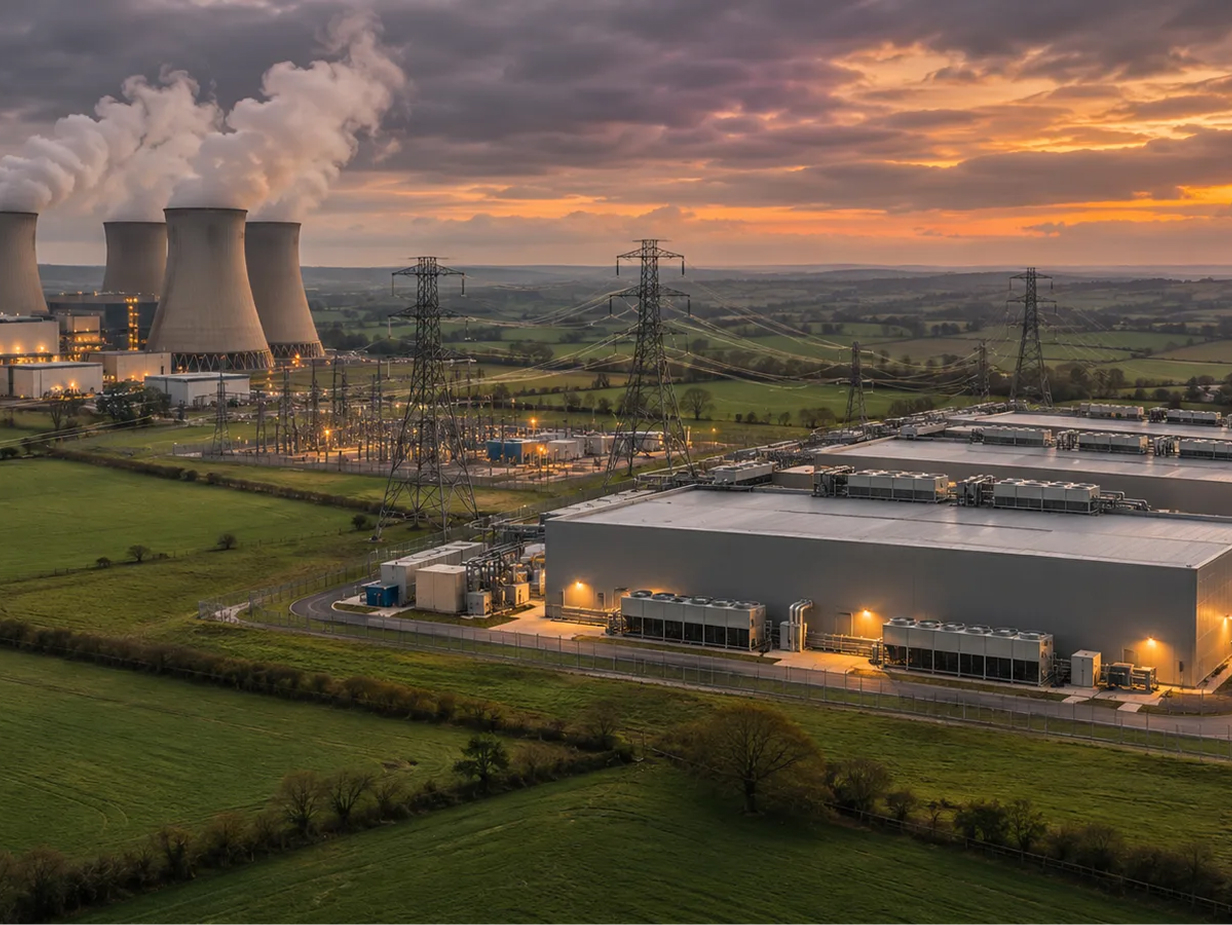
Partnership to develop, deliver and operate GW-scale AI data centre capacity at Drax Power Station in North Yorkshire, with total potential investment of more than £20 billion and an initial £2.5 billion for the first phase.
North Yorkshire – November 3, 2026 – Drax Group, Brookfield, Radiant – Brookfield's UK-headquartered AI infrastructure platform – and Qai have announced a strategic partnership to jointly develop, deliver and operate gigawatt-scale data centre capacity at Drax Power Station.
A phased development
- Phase 1: up to 100MW of capacity, targeted to be operational from the first quarter of 2028.
- Phase 2: scaling to 500MW between 2028 and 2031.
- Phase 3: further capacity beyond 2031.
Phase 1 remains subject to planning, regulatory and network approvals, as well as securing a tenant for the project.
A site built for scale
The Drax Power Station estate covers around 1,000 acres, with 4GW of grid access, 2.6GW of active dispatchable generation and proximity to the UK fibre network. The partners believe the project aligns with the criteria set out in the Government's new Data Centre Covenant.
Drax Group CEO Will Gardiner said the partnership is an opportunity to secure the long-term future of the site and protect hundreds of jobs. The partners also plan to set up a voluntary community benefits fund and will carry out a community consultation ahead of the formal planning process.
Read the full announcement on drax.com
About Radiant
Radiant is a vertically integrated AI infrastructure company combining utility-scale powered land, long-term capital, and a proprietary AI infrastructure software platform. Radiant builds and operates AI factories for enterprises, telecommunications providers, and sovereign institutions, delivering scalable compute with utility-grade economics, operational resilience, and planning horizons aligned to the long-term demands of the AI economy.